When winter arrives in western Hunan, there is one dish that appears on every dinner table, in every village home, and in every restaurant from Zhangjiajie to Jishou: la rou chao dong sun (腊肉炒冬笋) — smoked pork stir-fried with winter bamboo shoots. It is the definitive Hunan winter combination: the deep, salty, wood-smoked flavor of cured pork belly meeting the crisp, clean, faintly sweet taste of fresh winter bamboo shoots. The two ingredients could not be more different — one preserved and intense, the other fresh and delicate — and that is precisely why they work so well together. Each bite is a study in contrast: smoky and bright, rich and clean, soft and crisp.
This is not a fancy dish. It is a home-cooking staple, the kind of thing your grandmother makes when the first bamboo shoots of the season push through the cold mountain soil. But there is a reason it has endured for centuries in Xiangxi cooking. The rendering of smoked pork fat creates a luxurious, smoky oil that coats every slice of bamboo shoot, transforming a simple winter vegetable into something deeply savory and unforgettable. It is the taste of a Hunan winter, distilled into a single stir-fry.
Winter bamboo shoots (冬笋, dōng sǔn) are one of the great seasonal treasures of Chinese cooking. Unlike spring bamboo shoots, which grow quickly and are harvested after they emerge from the ground, winter shoots are dug up while still buried beneath the soil — pale, tightly furled, and at their sweetest and most tender. They are only available for a few short months between late winter and early spring, making them something to look forward to. In Hunan, their arrival coincides perfectly with the season when la rou (smoked cured pork) is at its best — freshly smoked, firm, and fragrant from months of curing. The pairing is not accidental; it is the natural result of two ingredients reaching their peak at exactly the same time. When the winter bamboo shoot season ends, so does la rou chao dong sun — you will not find it on menus in summer, and that is part of what makes it special.
In Smoked Pork with Winter Bamboo Shoots, the wok must be smoking hot so the ingredients sear instantly, locking in moisture while developing the smoky wok hei (breath of the wok) that defines Hunan stir-fry. What sets it apart is the layering of the smoked cured pork that is a cornerstone of Hunan cuisine, the cured meats that reflect Hunan's preservation traditions, and the dried red chilies that provide a different, deeper heat than fresh ones. This dish embodies the Hunan philosophy: food should excite, warm, and satisfy all at once.
Ingredients
The ingredient list is short, but each component matters. Good smoked pork is the foundation — look for a piece with a good balance of fat and lean, and the deep mahogany color that tells you it has been properly smoked. Fresh winter bamboo shoots are ideal, but vacuum-packed ones work well too.
- Hunan smoked pork belly (la rou) — 300 g, skin on. Look for a piece with even marbling and deep mahogany color. If your la rou is very salty, soak it in warm water for 30 minutes before cooking.
- Winter bamboo shoots — 250 g. Fresh is best, but vacuum-packed or canned work too. If using canned, rinse well and soak in fresh water for an hour to remove the canning taste.
- Green garlic shoots (qing suan) — 2 stalks. These are the young, flat green leaves of the garlic plant. Not the same as garlic scapes (suan tai), which are round and firmer.
- Dried red chilies — 5 whole, cut into sections. Use medium-heat dried chilies for an authentic Xiangxi flavor.
- Ginger — 2 teaspoons, julienned. Fresh ginger adds a warm, aromatic note that complements the smoky pork.
- Light soy sauce — 1 tablespoon. Adds seasoning and a hint of umami depth.
- Shaoxing cooking wine — 1 teaspoon. For deglazing and adding aroma.
- Sugar — just a pinch, about 1/4 teaspoon. To balance the saltiness and round out the flavors.
Step-by-Step Instructions
-
Steam the smoked pork belly first. Start by rinsing the smoked pork belly under warm running water, gently scrubbing the surface to remove any soot or dust from the smoking process. Place it on a heatproof plate and steam over high heat for 15 to 20 minutes. The pork should be tender when pierced with a chopstick, and the fat layer should be translucent. Remove from the steamer and let it cool for a few minutes until you can handle it. Then slice it thinly against the grain, about 3 mm thick — you want each slice to have a bit of skin, fat, and lean meat.
Why steaming is essential
Raw la rou is dense, tough, and very salty. Steaming it first does three important things: it softens the meat so it is tender to eat, it mellows out the saltiness by drawing some of it out, and it releases the smoky aroma that makes la rou so special. If you try to stir-fry raw la rou directly, it will be tough, chewy, and overwhelmingly salty. The 15 to 20 minutes of steaming is worth every minute.
- Blanch the bamboo shoots to remove bitterness. While the pork steams, prepare the bamboo shoots. If using fresh winter bamboo shoots, peel off the tough outer sheaths, leaving only the pale, tender inner core. Cut them into thin slices about 2 mm thick — the thinner they are, the better they absorb the smoky flavor. Bring a pot of salted water to a rolling boil, add the bamboo shoot slices, and blanch for 3 to 4 minutes. Drain and rinse under cold running water to stop the cooking. Drain thoroughly — dry bamboo shoots stir-fry better than wet ones.
- Render the pork in a hot wok. Heat 1 tablespoon of cooking oil in a wok over medium heat. Add the sliced smoked pork belly and spread it out in a single layer. Let it cook slowly for 2 to 3 minutes, stirring occasionally. You will see the fat start to render out, creating a glossy, smoky pool at the bottom of the wok. The edges of the pork slices will curl up and turn golden. This rendering step is what gives the dish its deep, luxurious flavor — the rendered pork fat is what will coat every bamboo shoot slice.
- Bloom the chilies and ginger. Push the rendered pork to the sides of the wok, creating a clear space in the center. Add the dried red chili sections and julienned ginger to the hot oil. Stir-fry for 10 to 15 seconds — just until you can smell the fragrant chili aroma. Watch carefully; dried chilies burn very quickly, and burnt chilies will make the whole dish bitter. Once fragrant, toss everything together with the pork.
- Stir-fry the bamboo shoots over high heat. Turn the heat up to high. Add the well-drained bamboo shoot slices to the wok. Stir-fry vigorously for 2 to 3 minutes, tossing constantly with your spatula. The goal is to heat the bamboo shoots through and let them absorb the smoky rendered fat, while still maintaining their crisp-tender texture. Drizzle the Shaoxing wine around the edge of the wok — it should sizzle dramatically as it hits the hot metal. Then add the light soy sauce and the pinch of sugar. Stir well to combine everything evenly.
-
Finish with green garlic and serve. Finally, add the green garlic shoot sections. Stir-fry for another 20 to 30 seconds — just until the greens wilt slightly and release their fresh, garlicky aroma. Do not overcook them; they should still be bright green and vibrant. Give the dish a taste and see if it needs anything. It probably will not need salt — the smoked pork and soy sauce provide plenty. Transfer to a serving plate and serve immediately with steamed white rice.
Green garlic, not garlic scapes
This recipe calls for qing suan (青蒜), which are green garlic shoots — the flat, leafy green tops of young garlic plants. They have a mild, fresh garlic flavor and a tender texture. They are not the same as suan tai (蒜薹), garlic scapes, which are the round, firm flowering stalks of mature garlic plants. The confusion is common, even in Chinese grocery stores. If you cannot find green garlic shoots, Chinese chives (jiu cai) or scallion greens make a reasonable substitute, but the flavor will be different.
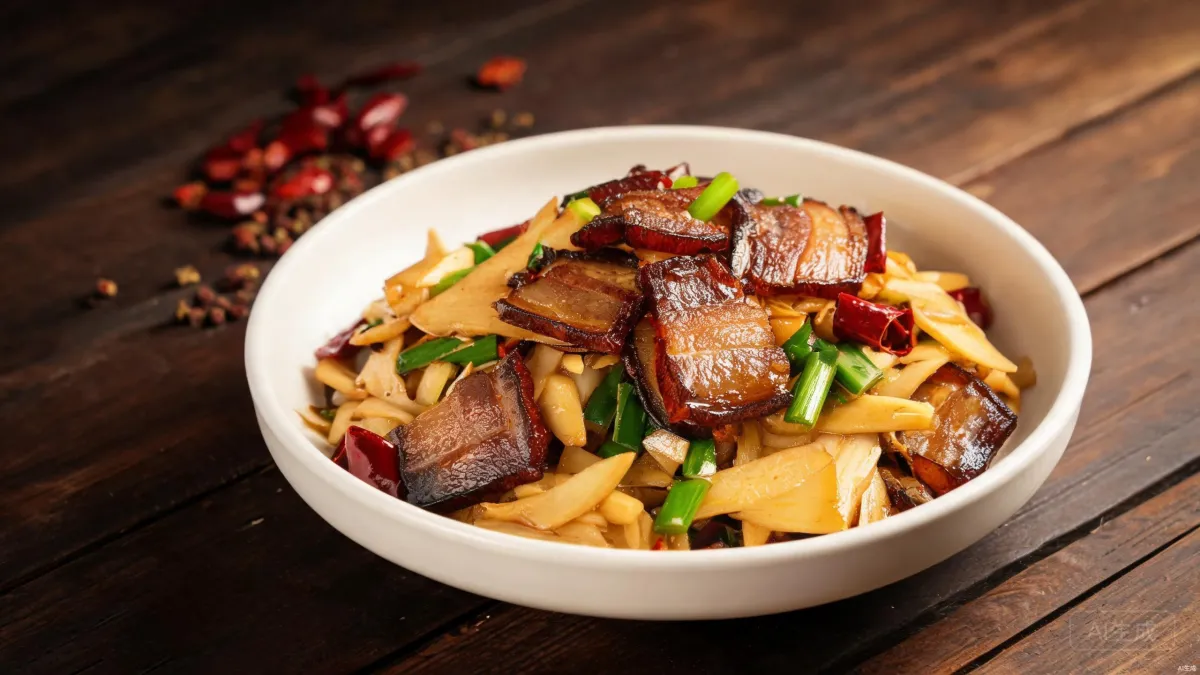
This dish is a masterclass in flavor pairing. The two ingredients complement each other on every level:
- Flavor contrast. La rou is deep, smoky, salty, and rich. Winter bamboo shoots are mild, sweet, clean, and delicate. Together they balance each other perfectly — neither overwhelms the other.
- Texture contrast. The pork is soft and yielding, with melting fat and chewy skin. The bamboo shoots are crisp and snappy. Every bite has both textures.
- Seasonal harmony. Both ingredients are at their peak in late winter. Bamboo shoots are dug up before spring; la rou has had all winter to cure and smoke. The dish is a celebration of the season.
- Fat absorption. The rendered pork fat is what makes the dish luxurious, and the bamboo shoots — which have very little fat of their own — absorb that smoky oil like a sponge, becoming deeply flavorful without being greasy.
Pro Tips for Success
These three tips will make the difference between a good version and a restaurant-worthy one:
- Blanch bamboo shoots, always. Winter bamboo shoots contain oxalic acid that makes them bitter and astringent. Blanching for 3 to 4 minutes removes it completely. Never skip this step.
- Go easy on the salt. Smoked pork is already heavily salted. Taste before adding any extra salt — you almost certainly will not need it. If anything, add a pinch more sugar to balance the saltiness.
- Use green garlic (qing suan), not garlic scapes. They look different, taste different, and cook differently. Green garlic is flat-leafed and tender; garlic scapes are round and firm. Get the right one.
Substitutions & Adjustments
Less spicy
Reduce the dried chilies to 2 or 3, or remove all the seeds. For a completely mild version, omit the chilies entirely and use just ginger for aromatic warmth. The dish will still be delicious — the smoky pork and bamboo combination shines on its own.
Ingredient substitutes
- No winter bamboo shoots: Use fresh spring bamboo shoots, but they will be less sweet and more fibrous. Canned bamboo shoots work in a pinch, but rinse and soak them first.
- No Hunan la rou: You can use Sichuan or other regional smoked pork, or even Chinese-style bacon. The flavor will be different but still good.
- No green garlic shoots: Substitute with Chinese chives (jiu cai) or scallion greens. The texture and flavor will differ, but the dish will still work.
Storage
Leftovers keep in the refrigerator for up to 3 days. The bamboo shoots will soften as they sit, but the flavor actually deepens. Reheat in a wok or skillet over medium heat — the rendered fat will liquefy again and coat the bamboo shoots. Add a splash of water if it seems dry.
Nutrition
Estimated values per serving (recipe serves 3-4). Smoked pork is rich and fatty — this is a hearty winter dish, not a light one. Serve with plenty of rice and a vegetable side for a complete meal.
| Nutrient | Per serving |
|---|---|
| Calories | 380 kcal |
| Protein | 18 g |
| Total fat | 28 g |
| Saturated fat | 10 g |
| Carbohydrates | 12 g |
| Fiber | 3 g |
| Sodium | 890 mg |
| Sugar | 3 g |
Values are estimates based on standard ingredient databases. Actual nutrition will vary depending on the fat content of your smoked pork and the amount of oil you use.
Frequently Asked Questions
- Overcooking the main ingredient — Hunan steamed dishes rely on freshness; steam just until cooked through.
- Skipping the fermented chilies — duojiao is what makes the dish authentically Hunan, not just spicy.
- Using cold water in the steaming liquid — always start with hot water to maintain consistent steam temperature.
Steamed white rice is essential — the savory juices from the steaming process are meant to be mixed with rice. Add a simple stir-fried green vegetable like Hunan stir-fried spinach or garlic bok choy for a complete meal. A bowl of clear soup on the side helps balance the bold flavors.
What Makes It Hunan
Smoked Pork with Winter Bamboo Shoots is a quintessential Hunan dish that showcases the bold, unapologetic flavors of Xiang cuisine. Unlike Sichuan's numbing-spicy heat, Hunan cooking relies on dry, direct spiciness from fresh and dried chilies, complemented by the deep umami of fermented ingredients like duojiao (chopped salted chilies) and douchi (fermented black beans).
In Hunan kitchens, pork is treated with reverence — whether smoked into larou (cured pork belly), braised slowly like this version, or stir-fried with fresh chilies. The province's mastery of pork cookery comes from centuries of preserving meat through smoking, salting, and fermenting, techniques born of humid southern winters and refined into high cuisine.
Smoking (xun) is central to Hunan food preservation and flavor. Meats are cured with salt and spices, then hung over a slow fire of pine, sugarcane, or tea branches — a technique born of humid southern winters and refined into one of China's great culinary traditions.
This recipe represents the Hunan preparation. Many Chinese-American restaurant versions of Hunan dishes add extra sugar, use pre-made sauces, or deep-fry ingredients that are traditionally stir-fried. The key difference is that Hunan cooking uses fresh whole chilies, fermented condiments like duojiao and douchi, and high-heat wok techniques — not thick, sweet sauces.
Related Recipes
If you love the smoky, savory flavors of Xiangxi cooking, these other recipes explore the same cured and smoked ingredient tradition.