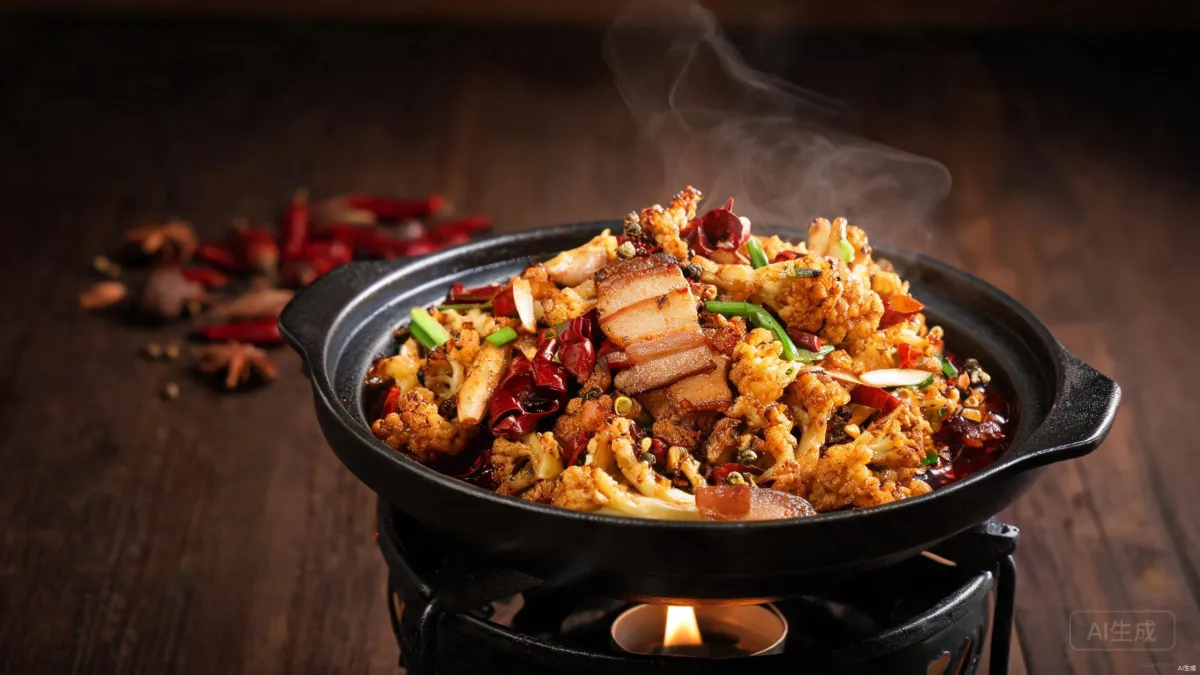
Walk into any Hunan restaurant in China, look around the room, and you will see it on almost every table: a small clay pot perched over a flickering candle, filled with cauliflower that sizzles and crackles as it cooks slowly in fragrant chili oil. This is gan guo hua cai (干锅花菜) — dry pot cauliflower — quite possibly the most popular vegetable dish in all of Hunan cuisine. It is spicy, it is numbing, it is savory, and it is utterly addictive. The longer it sits on the table, the deeper and more concentrated the flavor becomes.
What makes dry pot cauliflower special is not any single ingredient but the technique. The cauliflower is dry-fried over high heat until the edges char slightly and the texture shifts from soft to something more intense — caramelized, almost meaty. Then it is tossed with rendered pork belly, fermented broad bean paste, dried chilies, and Sichuan peppercorns, and served in a pot that keeps cooking at the table. Every bite has heat, numbingness, umami, and that deep, toasty flavor that only comes from high-heat cooking. It is the kind of dish that makes you reach for another piece before you have finished the first one.
Dry pot (干锅, gān guō) is one of Hunan's great contributions to Chinese cooking, and it is exactly what it sounds like: a pot of food that is relatively dry — no broth, no heavy sauce — served with a heat source underneath so it keeps cooking while you eat. The technique originated in the rural areas of Hunan, where families would gather around a charcoal brazier in winter, cooking vegetables and meat in earthenware pots over low heat. The slow cooking concentrates flavors and keeps the food warm through a long, leisurely meal. In restaurants, dry pot is served with a small candle or portable burner under a clay pot, and the dish continues to develop flavor as you eat. The first bite is good; the last bite, 20 minutes later, is even better. Dry pot can be made with almost anything — potato, lotus root, mushrooms, tofu, beef, frog — but cauliflower remains the undisputed favorite.
In Dry Pot Cauliflower, the wok must be smoking hot so the ingredients sear instantly, locking in moisture while developing the smoky wok hei (breath of the wok) that defines Hunan stir-fry. What sets it apart is the layering of the fermented chilies that add depth beyond mere heat, the dried red chilies that provide a different, deeper heat than fresh ones, and the chili oil that is drizzled generously over nearly everything in Hunan. For Hunan families, dishes like this are daily fare — a testament to the region's belief that every meal should be vibrant and memorable.
Ingredients
The ingredient list is short, but each component pulls its weight. The quality of the doubanjiang and the Sichuan peppercorns matters more than anything else — buy the best you can find.
- Cauliflower — 1 head, about 500 g. Look for a tight, compact head with creamy-white florets and no brown spots. The stem should feel heavy and firm.
- Pork belly — 100 g, thinly sliced. Do not skip this — the rendered pork fat is what gives the dish its soul. Use a piece with good marbling.
- Dried red chilies — 10 whole. Use Sichuan-style facing heaven chilies (chao tian jiao) or any medium-hot dried chili. Cut them into sections with scissors.
- Sichuan peppercorns — 1 tablespoon. These provide the numbing (ma) sensation that balances the heat. Use fresh, fragrant peppercorns — stale ones have no flavor.
- Doubanjiang — 1 tablespoon. Broad bean chili paste, the fermented chili base. Pixian doubanjiang is the gold standard.
- Aromatics — garlic, ginger, and scallions. The classic trio.
- Seasonings — light soy sauce, a touch of dark soy sauce for color, and a pinch of sugar to balance everything.
Step-by-Step Instructions
-
Break the cauliflower and soak in salt water. Cut the cauliflower into small, bite-sized florets by cutting through the stem and pulling the florets apart with your fingers. Try to keep them roughly the same size — about 3 to 4 cm across — so they cook evenly. Place the florets in a large bowl of cold water with 1 teaspoon of salt. Stir to dissolve the salt and let them soak for 10 minutes. The saltwater draws out any tiny insects that might be hiding in the crevices and cleans the florets thoroughly. After soaking, drain very well and pat dry with a clean kitchen towel or paper towels.
Dry cauliflower = good dry pot
This is the single most important tip for great dry pot cauliflower: the florets must be completely dry before they hit the wok. Wet cauliflower will steam instead of fry, turning mushy and waterlogged instead of crisp and slightly charred. After draining, pat them dry with a towel. It takes an extra minute, and it makes all the difference. If you skip this step, nothing else you do will save the dish.
- Render the pork belly until golden. Heat 1 tablespoon of oil in a wok over medium heat. Add the thinly sliced pork belly and spread it out in a single layer. Let it cook for 3 to 4 minutes, stirring occasionally, until the fat renders out and the edges turn golden and slightly crispy. You want the pork to release enough fat to coat all the cauliflower — this rendered pork fat is the secret to the dish's deep, meaty flavor. If your pork belly is very lean, you may need to add a bit more oil. If it is very fatty, spoon out a little excess, but leave at least 2 tablespoons in the wok.
- Fry the doubanjiang to release its flavor. Push the rendered pork to one side of the wok. Lower the heat to medium-low. Add the doubanjiang to the pool of hot oil. Stir-fry it for about 30 seconds, mashing it against the side of the wok with your spatula. You will see the oil turn a bright, glossy red, and the kitchen will fill with the deep, savory aroma of fermented chilies. This step — frying the chili paste in hot oil — is what unlocks its full flavor. Raw doubanjiang tastes flat and harsh; properly fried, it is rich and complex.
- Bloom the chilies and peppercorns. Add the dried red chili sections, Sichuan peppercorns, sliced garlic, and ginger slices to the wok. Stir-fry for 10 to 15 seconds — just until everything becomes fragrant. You should be able to smell the citrusy aroma of the Sichuan peppercorns and the deep heat of the dried chilies. Watch the garlic carefully; it burns very quickly, and burnt garlic tastes bitter. Then toss everything together so the pork, the red oil, and the aromatics are all combined.
-
Stir-fry the cauliflower over high heat. Turn the heat up to the highest setting. Add the well-dried cauliflower florets to the wok. Stir-fry vigorously for 5 to 7 minutes, tossing and turning constantly with your spatula. This is dry-frying — you are cooking the cauliflower without any added liquid, letting the high heat char the edges slightly and concentrate the flavor. The cauliflower should be tender-crisp when done: cooked through but still with a firm bite, not soft and mushy. If your wok is small and the cauliflower is crowded, cook it in two batches.
High heat + constant tossing = perfect texture
The goal is to cook the cauliflower quickly over very high heat, tossing constantly so it does not burn but gets evenly exposed to the hot surface of the wok. This technique — dry frying, or gan bian (干煸) — is what gives dry pot dishes their characteristic slightly charred, intensely flavored quality. If the heat is too low, or if you do not toss often enough, the cauliflower will steam and become mushy. Embrace the high heat and keep everything moving.
- Season and serve in a dry pot. Drizzle in the light soy sauce and dark soy sauce, and add the pinch of sugar. Stir-fry for another 1 to 2 minutes, making sure every floret is evenly coated in the glossy, deep-red sauce. Taste a piece and adjust seasoning if you like — a little more soy, a little more sugar, whatever it needs. Finally, toss in the scallion sections and give everything one final stir. Transfer the entire dish to a small clay pot, cast-iron skillet, or any heatproof dish. If you have a small tabletop burner or a candle warmer, set the pot on top of it so it keeps sizzling at the table. Serve with steamed rice.
Dry pot cauliflower is a classic example of ma la (麻辣) — the numbing-spicy flavor combination that defines much of Hunan and Sichuan cooking. The two elements must be in balance:
- Ma (麻 — numbing). From Sichuan peppercorns. It creates a tingling, numbing sensation on the tongue that is not exactly spicy — more like a gentle buzzing. It should be noticeable but not overwhelming.
- La (辣 — spicy). From dried chilies and doubanjiang. It provides the burning heat that builds as you eat. It should be present but not painful.
When ma and la are in balance, they create a kind of feedback loop: the numbing sensation makes the heat feel more pleasant, and the heat makes the numbing feel more interesting. Together they are greater than the sum of their parts. Adjust both to your taste — some like more ma, some like more la — but aim for balance.
Pro Tips for Success
These are the three things that separate restaurant-quality dry pot cauliflower from home attempts:
- Drain the cauliflower completely. Wet cauliflower = steamed cauliflower = mushy cauliflower. Pat it dry with a towel if you have to. This is non-negotiable.
- Stir-fry over the highest heat you have. Dry pot is about high-heat dry-frying, not gentle cooking. The edges should char slightly. If your stove is weak, cook in smaller batches.
- Pork belly is the soul of the dish. Do not skip it, do not substitute it with lean pork, and do not use less than 100 g. The rendered fat is what makes the cauliflower taste incredible. If you must go vegetarian, use extra oil and add fermented black beans for umami.
Substitutions & Adjustments
Less spicy
Use fewer dried chilies, or remove all the seeds. Reduce the Sichuan peppercorns to 1 teaspoon for less numbing sensation. You can also use less doubanjiang — start with 1 teaspoon and add more to taste. The dish will still be flavorful; it just will not have the same fiery kick.
Add-ins and variations
- Add vegetables: Thinly sliced potato, lotus root, mushrooms, bell pepper, or green beans all work well in dry pot. Add harder vegetables first so they have time to cook.
- Add protein: Sliced beef, chicken, tofu puffs, or shrimp can all be added. Cook the protein first, remove it, and add it back at the end.
- Extra numbing: Add more Sichuan peppercorns, or use Sichuan peppercorn oil for an extra ma kick.
- Extra garlicky: Add a handful of chopped garlic at the very end for a fresh, pungent garlic flavor.
Storage
Leftovers keep in the fridge for up to 3 days. Reheat in a wok or skillet over medium-high heat — the cauliflower will soften more but the flavor will still be good. You can also reheat it in a dry pot style: put it in a small pot with a lid and warm it over low heat, stirring occasionally.
Nutrition
Estimated values per serving (recipe serves 3-4). This is a relatively rich vegetable dish due to the pork belly and cooking oil — it is more substantial than a plain steamed vegetable side.
| Nutrient | Per serving |
|---|---|
| Calories | 320 kcal |
| Protein | 12 g |
| Total fat | 24 g |
| Saturated fat | 7 g |
| Carbohydrates | 16 g |
| Fiber | 5 g |
| Sodium | 780 mg |
| Sugar | 5 g |
Values are estimates based on standard ingredient databases. Actual nutrition will vary depending on the fat content of your pork belly and the amount of oil you use.
Frequently Asked Questions
- Wok not hot enough — the oil should be shimmering but not smoking before you add ingredients.
- Overcrowding the wok — cook in batches if needed; too much food at once causes steaming instead of stir-frying.
- Cutting ingredients unevenly — uniform pieces ensure everything cooks at the same rate.
- Adding sauce too early — let the ingredients sear first, then add sauce in the final 30 seconds.
Serve immediately with steamed white rice — the dish should still be sizzling when it reaches the table. A simple soup like egg drop soup or tomato egg soup provides a cooling contrast. For a full Hunan spread, add one cold appetizer and one vegetable dish.
What Makes It Hunan
Dry Pot Cauliflower is a quintessential Hunan dish that showcases the bold, unapologetic flavors of Xiang cuisine. Unlike Sichuan's numbing-spicy heat, Hunan cooking relies on dry, direct spiciness from fresh and dried chilies, complemented by the deep umami of fermented ingredients like duojiao (chopped salted chilies) and douchi (fermented black beans).
Hunan vegetable cooking celebrates the dry wok (gan guo) and the quick stir-fry (xiao chao). Eggplant is charred, beans are blistered, and leafy greens hit screaming-hot oil with garlic and dried chilies. The goal is vivid texture and a bright, mouth-watering sour-spicy balance.
The dry wok (gan guo) is pure Hunan theater: ingredients sizzle in a seasoned clay pot with minimal sauce, intensifying flavors as the liquid reduces to a glaze. It arrives still bubbling at the table — a dish that is as much an event as a meal.
This recipe represents the Hunan preparation. Many Chinese-American restaurant versions of Hunan dishes add extra sugar, use pre-made sauces, or deep-fry ingredients that are traditionally stir-fried. The key difference is that Hunan cooking uses fresh whole chilies, fermented condiments like duojiao and douchi, and high-heat wok techniques — not thick, sweet sauces.
Related Recipes
If you love the bold, numbing-spicy flavors of dry pot cooking, these other Hunan dishes use similar techniques and pantry staples.