If there is one soup that every Hunan and Hubei household knows how to make, it is lian ou pai gu tang (莲藕排骨汤) — lotus root and pork rib soup. It is the ultimate comfort soup, the nourishing soup, the soup you make when someone is sick, when someone is tired, when the weather turns cold, or when you just want something that tastes like home. The broth is clear and pale, the meat falls off the bone, and the lotus root is soft and starchy, almost creamy in texture. It is simple, it is humble, and it is deeply, fundamentally satisfying.
What makes this soup special is not any fancy technique or rare ingredient. It is the quality of the lotus root and the patience of slow cooking. In the Dongting Lake region — the vast wetland area where Hunan meets Hubei, where lotus grows in endless ponds and waterways — lotus root is not just a vegetable. It is a staple, a way of life, and a symbol of the region's fertile waters. Good starchy lotus root, simmered slowly with good pork ribs, produces a soup that is greater than the sum of its parts. The starch from the lotus root thickens the broth slightly, giving it a silky mouthfeel, and the sweet, earthy flavor of the root infuses every drop.
The Dongting Lake (洞庭湖, Dòngtíng Hú) region of northern Hunan and southern Hubei is one of China's great lotus-growing areas. The shallow, nutrient-rich waters of the lake and its surrounding wetlands produce some of the finest lotus root in the country — large, sweet, and densely starchy. For centuries, people in this region have dug lotus root from the mud of drying ponds in late autumn and winter, using it in everything from soups to stir-fries to candied desserts. Lotus root and pork rib soup is perhaps the most beloved of all these dishes — a bowl of it tastes of the lake, of the earth, and of home. In traditional Chinese medicine, lotus root is considered wen bu (温补, warming and nourishing) — gentle enough for children, the elderly, and people recovering from illness. It is the soup that mothers make for their children, that grandmothers pass down to granddaughters, and that every Hunan person carries with them, no matter how far from home they go.
In Lotus Root and Pork Rib Soup, the long-simmered broth draws out deep, warming flavors that Hunan families rely on through cold, damp winters. Like all Hunan dishes, it relies on the bold interplay of chili heat, fermented depth, and the natural savoriness of fresh ingredients. This dish embodies the Hunan philosophy: food should excite, warm, and satisfy all at once.
Ingredients
The ingredient list could not be shorter, but each ingredient matters. The type of lotus root you choose makes or breaks this soup — get the right kind, and everything else follows.
- Pork spare ribs — 500 g. Ask your butcher to cut them into 5 cm sections. Use ribs with some meat on them and a bit of marbling — too lean and the soup will be flat.
- Lotus root — 1 section, about 400 g. Use seven-hole starchy lotus root (七孔藕/粉藕). It becomes soft and creamy when cooked. Do not use nine-hole crisp lotus root (九孔藕/脆藕) — it stays crunchy and is for stir-fries.
- Ginger — 3 thick slices. Fresh ginger cuts through the richness of the pork and adds a warm, aromatic note.
- Scallions — 2 stalks, tied into a knot for cooking, plus extra chopped greens for garnish.
- Shaoxing cooking wine — 1 tablespoon. Adds depth and helps remove any gamey taste from the pork.
- Salt — added at the end, to taste.
- White pepper powder — just a pinch, for subtle warmth. The classic Chinese soup seasoning.
- Goji berries — optional, for garnish. They add a pop of color and a hint of sweetness.
Step-by-Step Instructions
-
Blanch the ribs from cold water. Place the pork rib sections in a large pot and cover them completely with cold water. Add 1 slice of ginger and half the Shaoxing wine. Turn the heat to high and slowly bring the water to a boil. As it heats up, you will see a grayish foam rising to the surface — that is blood and impurities being drawn out of the bones. Let it boil vigorously for 3 to 5 minutes. Then turn off the heat, drain the ribs in a colander, and rinse them thoroughly under warm running water to remove any remaining foam. Set the clean ribs aside.
The cold-water blanching rule
Starting with cold water is the secret to clear, clean-tasting soup. If you dump ribs into boiling water, the outside sears instantly, trapping impurities inside the bone. Those impurities then slowly leach out during simmering, making your broth cloudy, gray, and off-tasting. Cold-water blanching draws everything out gradually, leaving you with clean bones and a crystal-clear broth. This technique applies to all Chinese bone soups — pork, chicken, beef, whatever. It is the first and most important lesson in Chinese soup making.
- Prep the lotus root. While the ribs blanch, prepare the lotus root. First, check that you have the right kind: cut off a thin slice and look at the cross-section. If you see seven large holes arranged in a ring and the flesh is pale pinkish-beige, you have starchy soup lotus root — perfect. If you see nine smaller holes and white flesh, it is crisp lotus root and will not get tender in soup. Peel the brown outer skin with a vegetable peeler or a sharp knife. Cut the lotus root into thick roll-cut (滚刀块, gǔn dāo kuài) pieces: make a diagonal cut, roll the lotus root a quarter turn, then make another diagonal cut. This creates irregular wedge-shaped pieces with more surface area, which helps release starch into the soup. As you cut, drop the pieces into a bowl of cold water to prevent browning.
- Combine everything in a clay pot. Transfer the blanched and rinsed ribs to a clay pot (also called an earthenware pot or sha guo, 砂锅). A clay pot is ideal for slow-simmered soups because it distributes heat evenly and retains temperature beautifully — but if you do not have one, a heavy-bottomed Dutch oven or any thick soup pot will work. Add the drained lotus root pieces, the remaining 2 slices of ginger, the scallion knot, and the rest of the Shaoxing wine. Pour in enough cold water to cover everything by about 3 cm — roughly 2 to 2.5 liters. Do not add salt yet. Bring to a rolling boil over high heat.
- Simmer slowly for 90 minutes. Once the soup comes to a full rolling boil, immediately turn the heat down to the lowest setting. Cover the pot. You want a very gentle simmer — the kind where the surface of the soup just barely trembles, with only the occasional bubble breaking through. A rolling boil will make the broth cloudy and the meat tough. Let it simmer for 90 minutes. Resist the urge to lift the lid and stir frequently; every time you open the lid, heat escapes and the cooking time increases. After about an hour, take a quick look and skim any excess fat or foam from the surface if you want to. Some fat is good — it is where much of the flavor is. But if there is a thick layer of it, you can skim some off.
-
Season at the end. After 90 minutes, the soup should be done. Test the ribs: the meat should pull away from the bone easily. Test the lotus root: it should be tender and starchy, yielding easily when pierced with a chopstick but still holding its shape. Now season with salt and white pepper. Start with 1.5 teaspoons of salt, stir well, then taste and add more if needed. Season at the end, not at the beginning — salt draws moisture out of meat and can make it tough, and it is easier to adjust seasoning when you know the final concentration of the broth. If using goji berries, add them now and let them steep for 2 to 3 minutes until they plump up and turn bright red.
One water rule
In Chinese soup making, there is an unwritten rule: add all the water at the beginning, and never add more water halfway through. Adding cold water drops the temperature suddenly, which shocks the meat and can make it stringy and tough. It also dilutes the flavor and disrupts the starch release from the lotus root. Measure carefully at the start — about 3 cm above the ingredients — and maintain a low simmer so the water level does not drop too much. If you absolutely must add water, use boiling water to minimize the shock. But try to avoid it.
- Serve hot. Ladle the soup into bowls, making sure each bowl gets a few rib pieces and several chunks of lotus root. Garnish with a sprinkle of finely chopped scallion greens and a few goji berries for color. Serve alongside steamed rice and a stir-fried green vegetable for a complete, comforting meal. The soup tastes best fresh, but it actually improves slightly the next day as the flavors meld together. Leftovers reheat beautifully.
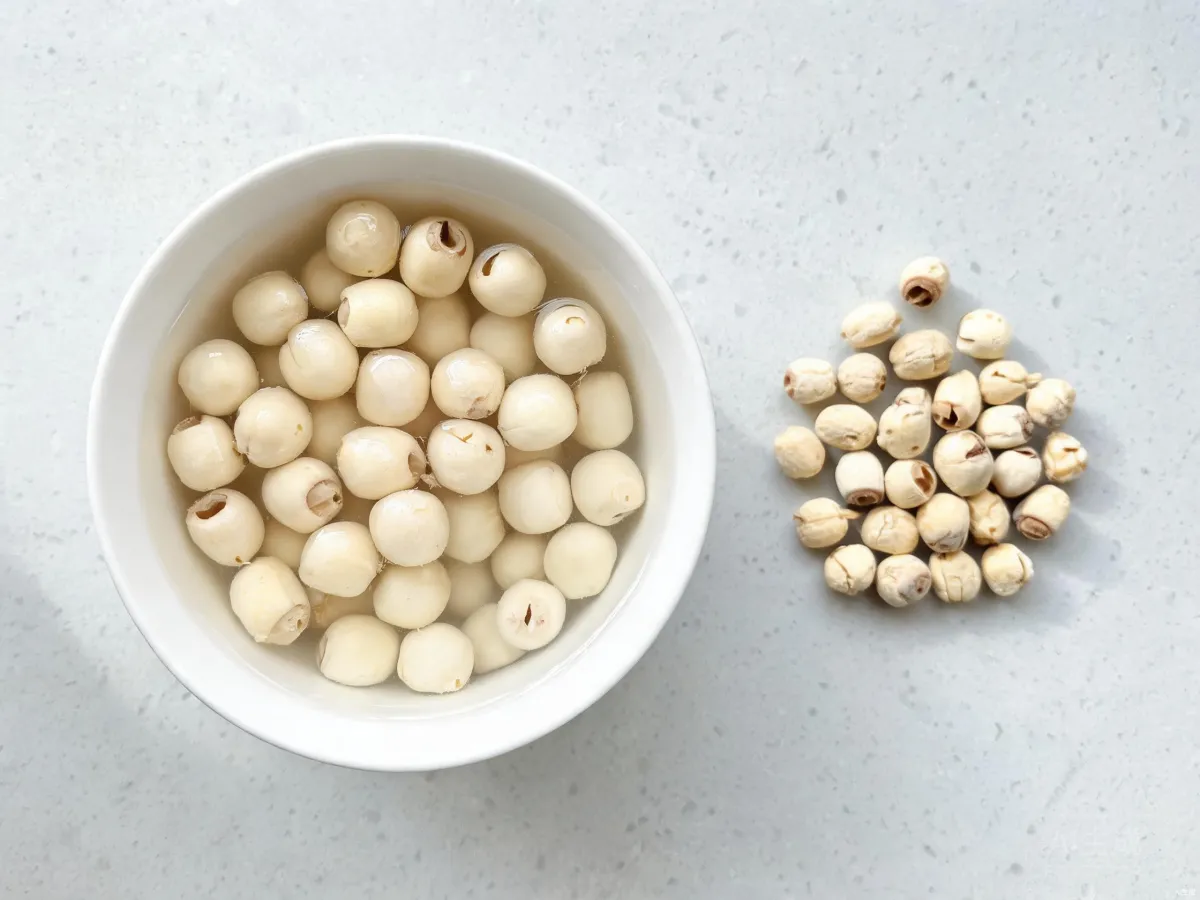
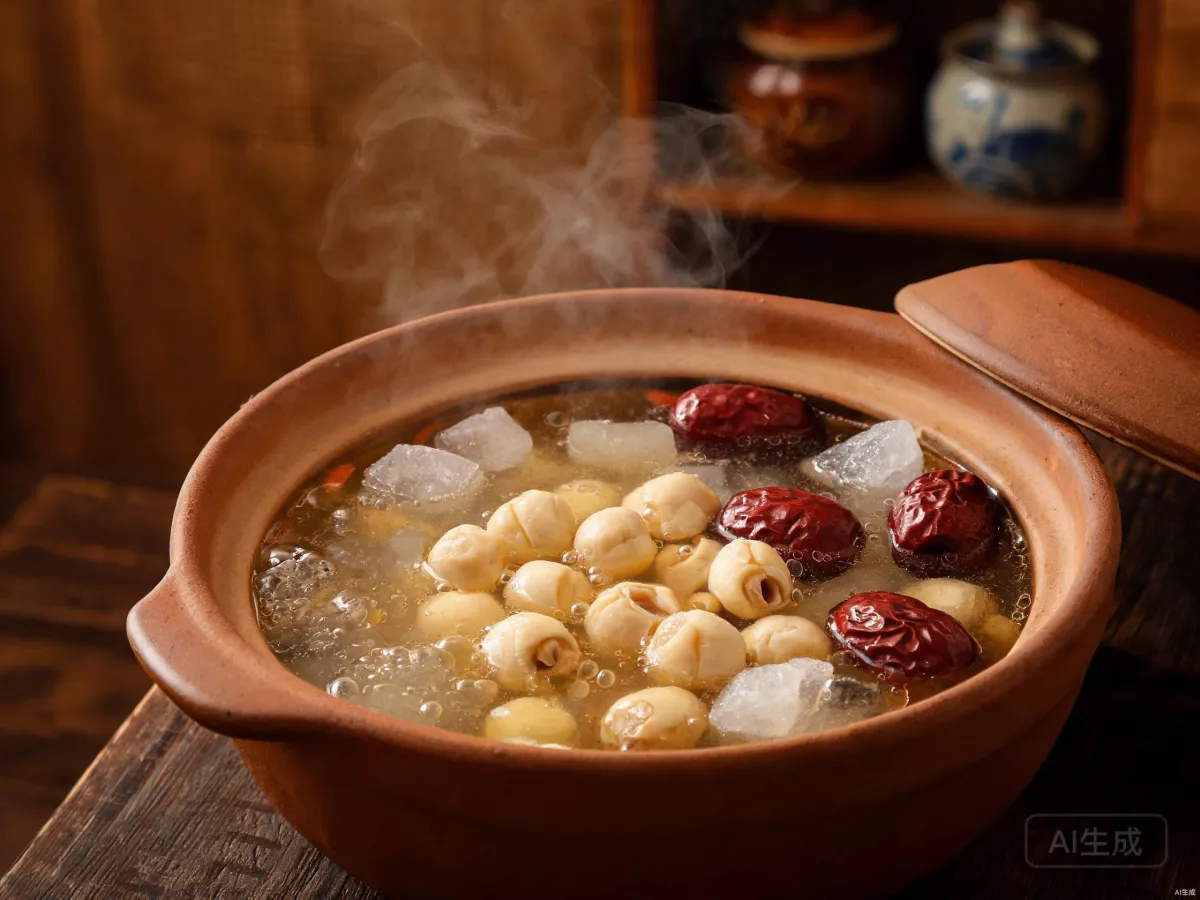
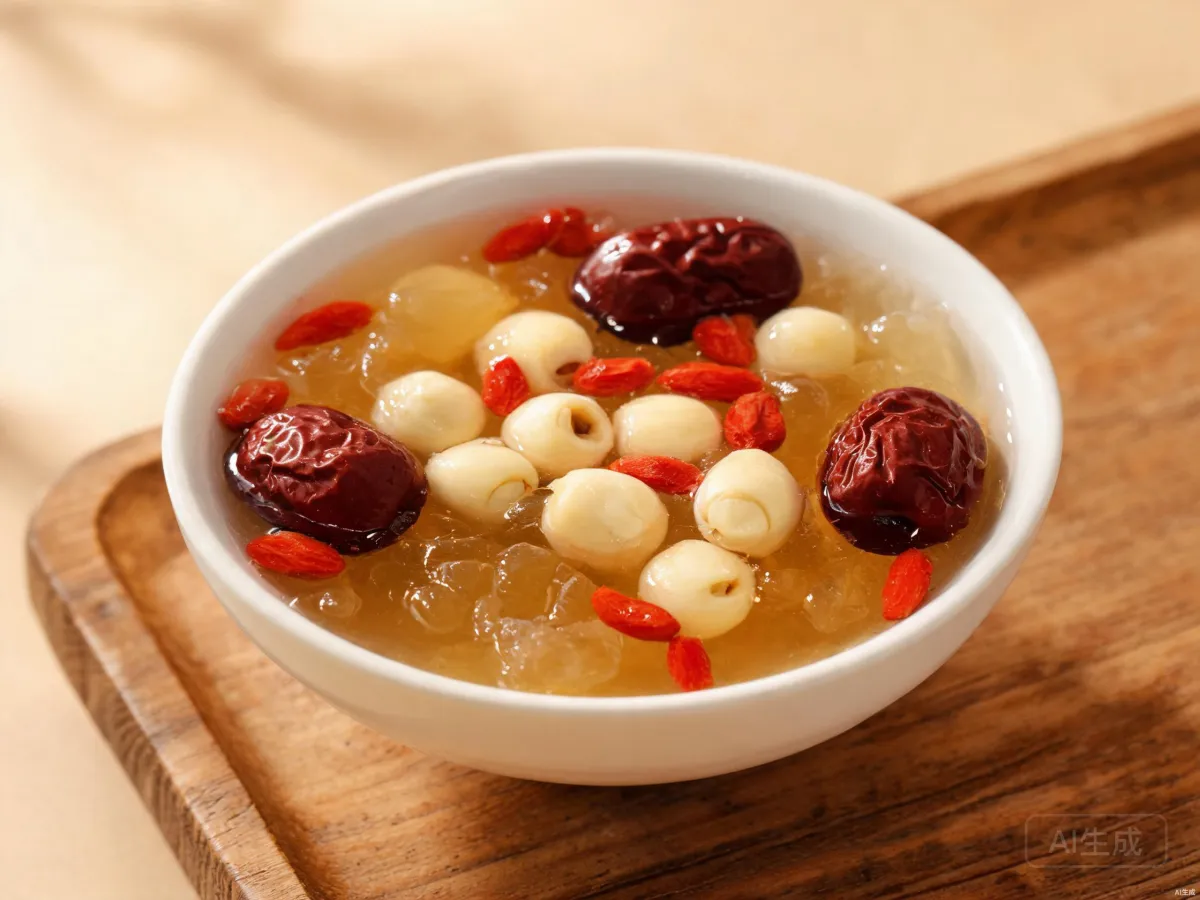
Many people do not realize that there are two fundamentally different types of lotus root, and using the wrong one will completely change your dish:
- Seven-hole lotus root (七孔藕 / 粉藕). Also called pink lotus root or starchy lotus root. Has seven large holes, pale pinkish-beige flesh, and a high starch content. When cooked, it becomes soft, tender, and almost creamy — the starch thickens the broth slightly. This is the kind you want for soups, braises, and steamed dishes. It is sweeter and more flavorful than the crisp variety.
- Nine-hole lotus root (九孔藕 / 脆藕). Also called white lotus root or crisp lotus root. Has nine smaller holes, pure white flesh, and a lower starch content. It stays crisp and snappy even after cooking, with a clean, fresh flavor. This is the kind you want for stir-fries, cold salads, and pickling. It will not get tender and starchy in soup, no matter how long you cook it.
When buying lotus root for soup, look for sections that are heavy for their size, with smooth, unblemished skin and both ends sealed (so mud does not get inside the holes). If you are not sure which type it is, ask the grocer — or just cut off a tiny slice and count the holes.
Pro Tips for the Best Soup
Follow these rules and your lotus root soup will rival anything you get in a restaurant:
- Choose seven-hole starchy lotus root. This is the single most important thing. The wrong lotus root stays crunchy in soup and never develops that melt-in-your-mouth texture.
- Use a clay pot if you can. Clay pots distribute heat evenly and retain it beautifully, creating the perfect environment for slow simmering. The soup tastes better from a clay pot — it is not just aesthetics.
- Add all the water at once. Do not add water halfway through. Measure carefully at the beginning and maintain a low simmer.
- Blanch ribs from cold water. This draws out impurities and gives you a clear, clean-tasting broth.
- Salt at the end. Salting early draws moisture out of the meat and can make it tough. Season at the end, and taste as you go.
Variations & Add-Ins
Add more vegetables
Lotus root and pork rib soup is endlessly adaptable. Try adding carrots, corn on the cob, dried dates, or peanuts for extra flavor and nutrition. Add harder vegetables (like carrots) at the beginning so they have time to cook; add softer ones (like corn) halfway through.
Herbal variations
In traditional Chinese cooking, this soup is often made with medicinal herbs for extra nourishment. Common additions include astragalus (huang qi), codonopsis (dang shen), dried longan, or goji berries. These add subtle sweetness and are believed to boost the immune system and improve energy.
Storage
Leftovers keep in the refrigerator for up to 3 days. The soup actually tastes better the next day as the flavors meld and the lotus root becomes even softer and starchier. Reheat gently over low heat — do not boil it vigorously or the lotus root might break apart. You can also freeze the soup for up to 1 month, although the texture of the lotus root will change slightly after freezing.
Nutrition
Estimated values per serving (about 1.5 cups, recipe serves 4-6). This is a nourishing, protein-rich soup that is relatively light despite the pork. Lotus root adds fiber and complex carbohydrates.
| Nutrient | Per serving |
|---|---|
| Calories | 280 kcal |
| Protein | 24 g |
| Total fat | 16 g |
| Saturated fat | 5 g |
| Carbohydrates | 14 g |
| Fiber | 2 g |
| Sodium | 620 mg |
| Sugar | 3 g |
Values are estimates based on standard ingredient databases. Actual nutrition will vary depending on the fat content of your ribs and the amount of lotus root per serving.
Frequently Asked Questions
- Overcooking the main ingredient — Hunan steamed dishes rely on freshness; steam just until cooked through.
- Skipping the fermented chilies — duojiao is what makes the dish authentically Hunan, not just spicy.
- Using cold water in the steaming liquid — always start with hot water to maintain consistent steam temperature.
Steamed white rice is essential — the savory juices from the steaming process are meant to be mixed with rice. Add a simple stir-fried green vegetable like Hunan stir-fried spinach or garlic bok choy for a complete meal. A bowl of clear soup on the side helps balance the bold flavors.
What Makes It Hunan
Lotus Root & Pork Rib Soup is a quintessential Hunan dish that showcases the bold, unapologetic flavors of Xiang cuisine. Unlike Sichuan's numbing-spicy heat, Hunan cooking relies on dry, direct spiciness from fresh and dried chilies, complemented by the deep umami of fermented ingredients like duojiao (chopped salted chilies) and douchi (fermented black beans).
In Hunan kitchens, pork is treated with reverence — whether smoked into larou (cured pork belly), braised slowly like this version, or stir-fried with fresh chilies. The province's mastery of pork cookery comes from centuries of preserving meat through smoking, salting, and fermenting, techniques born of humid southern winters and refined into high cuisine.
Whatever the technique, the goal is the same: clean, layered flavors with a clear throughline of chili heat and the savory depth that only slow building — through fermentation, smoking, or patient braising — can produce.
This recipe represents the Hunan preparation. Many Chinese-American restaurant versions of Hunan dishes add extra sugar, use pre-made sauces, or deep-fry ingredients that are traditionally stir-fried. The key difference is that Hunan cooking uses fresh whole chilies, fermented condiments like duojiao and douchi, and high-heat wok techniques — not thick, sweet sauces.
Related Recipes
If you love the gentle, nourishing flavors of Dongting Lake cooking, these other Hunan recipes explore similar territory with different ingredients and techniques.